

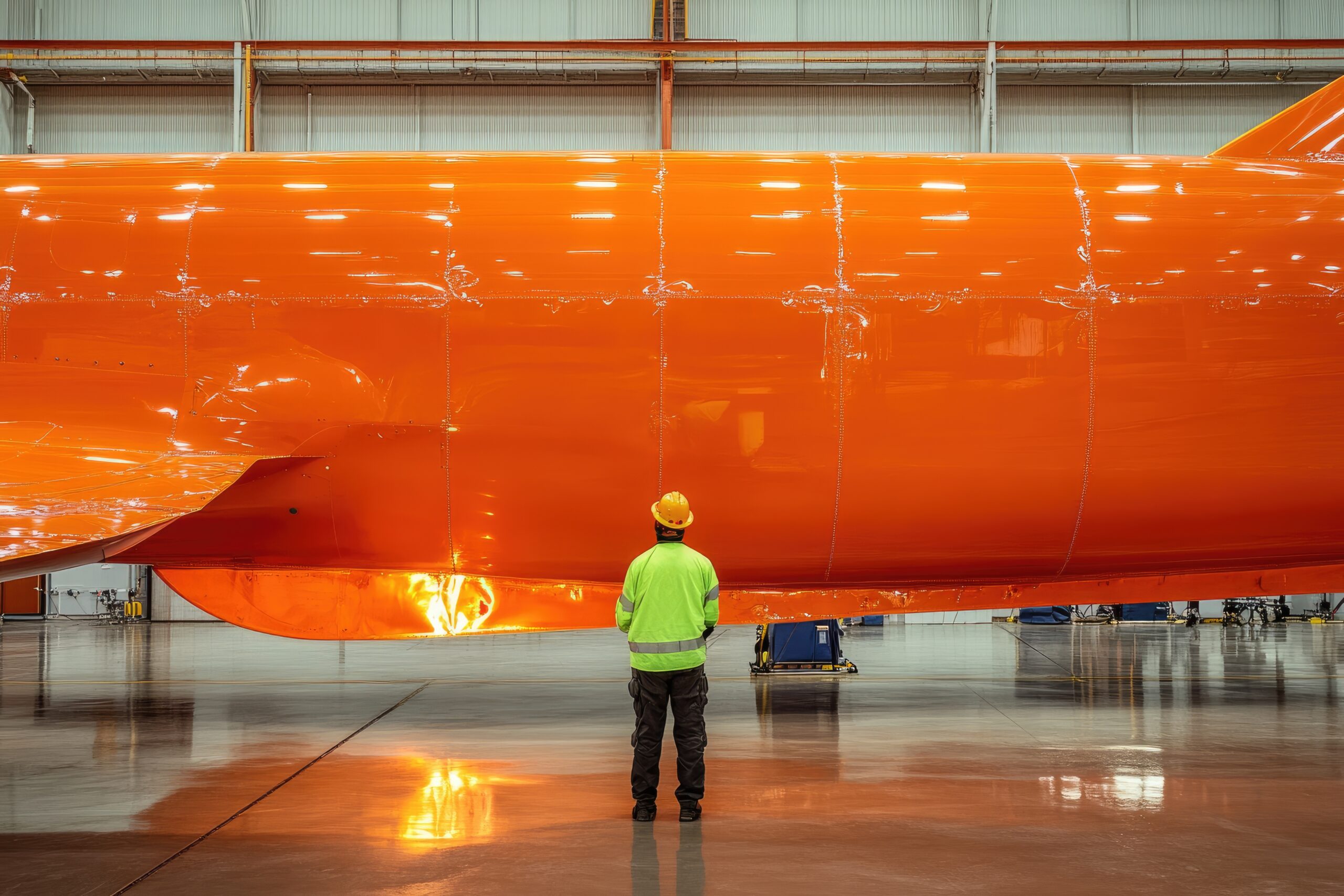
AI in composite inspection is becoming one of the most important developments in modern manufacturing and non-destructive testing. In the May 2026 issue of CompositesWorld, Editor-in-Chief Scott Francis made a case worth sitting with. AI has moved into composites manufacturing fast, and the honest question is no longer whether to use it but how. He framed AI as a collaborator that takes on the routine, time-consuming work so people can spend their attention where human judgment actually matters — and he argued that AI is here to supercharge the way we work, not to take the work away.
From the inspection side of the shop floor, we’d add one thing.
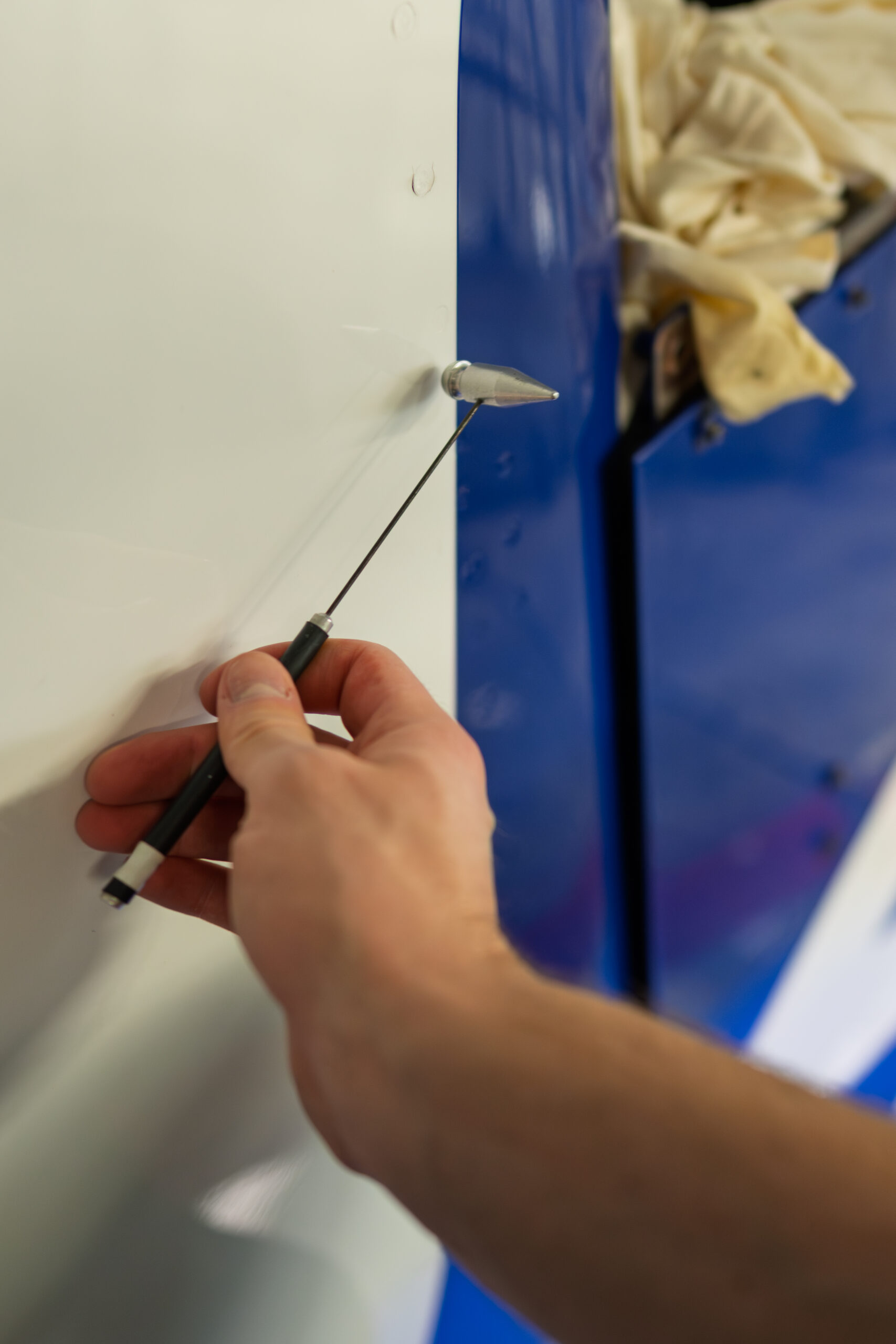
Tap testing remains a valuable non-destructive testing method for detecting disbonds, delaminations, and damage in composite structures.
The skills gap Francis points to is the same shortage we’ve been flagging for years. Properly trained, certified NDT technicians are scarce, and the ones who understand how carbon- and glass-fiber laminates, bondlines, foam cores, and structural adhesives actually behave under load are scarcer still. As AI in composite inspection becomes more common, the need for experienced inspectors who can interpret results and validate findings remains critical.
AI-Assisted Composite Inspection Still Requires Human Judgment
Modern inspection generates more data than manual analysis can keep up with. The robotic computed tomography system at our AIMM Center — Omni NDE’s Iris platform on UR20 collaborative robots — produces volumetric datasets that would take hours to threshold and segment by hand. This is where AI-assisted composite inspection provides measurable value. Deep-learning segmentation can flag porosity, voids, and delaminations across those volumes in minutes, with results that are consistent and repeatable.
But the disposition still belongs to a person. In NDT a missed indication is not a typo to be corrected later — it can be a structure, or a life. So the model does the heavy lifting on the data, and the certified Level III makes the call. That is precisely the supercharge Francis describes, applied to inspection: one inspector covers more area, more consistently, with their judgment reserved for the anomalies that experience is required to interpret.
The discipline underneath all of this hasn’t changed. Technology follows the inspection objective, not the other way around. AI is a tool, like phased array ultrasonics or laser shearography — powerful when pointed at the right problem, and dangerous when trusted blindly. NDT is not a magic wand, and neither is a neural network. Anything AI-assisted that touches a customer’s disposition gets validated against the standards we work to — NAS 410, EN 4179 — before it counts.
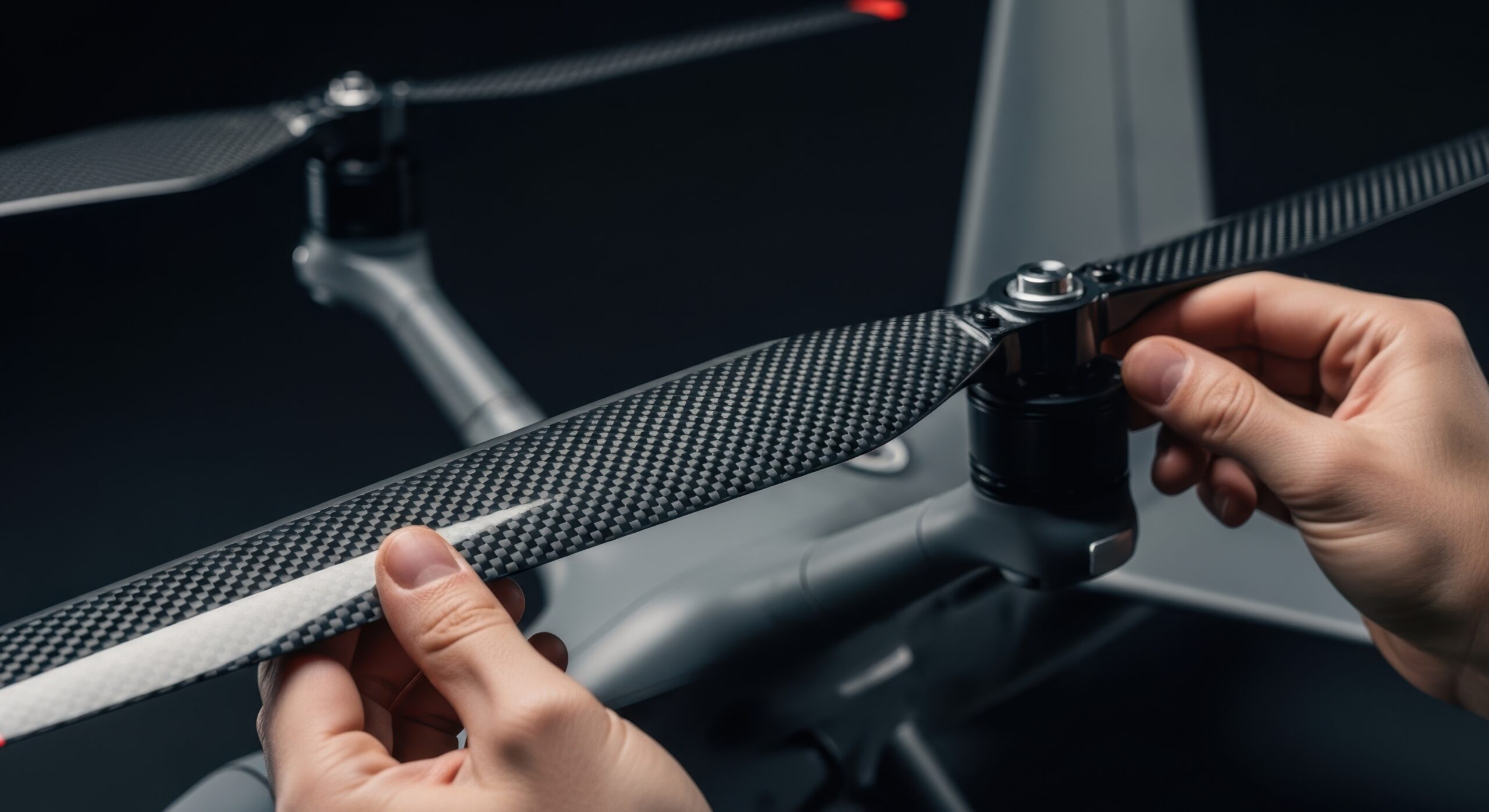
Carbon Fiber Drone Propeller Composite Inspection
Francis is right. Used well, AI bridges skills gaps, speeds development, and cuts waste. In inspection it can do all of that — on the condition that a trained human stays in the loop. From oceans to orbit, that’s how we intend to use it.
Inspired by “How AI is reshaping the ways we work,” Scott Francis, Editor-in-Chief, CompositesWorld*, May 2026.*